 w2pK0wutQ3G2
Long before his name became shorthand for architectural couture, Cristóbal Balenciaga learned to understand clothing as a practical craft. His story began in Getaria, a Basque fishing town, and developed through close contact with sewing, fitting and the habits of a working atelier. The current work of the Cristóbal Balenciaga Museum offers a useful moment to revisit that biography: not as a simple tale of genius, but as a study in how skill, observation and patience can shape a lasting creative language.
A beginning shaped by making
Balenciaga Eizaguirre was born in Getaria on 21 January 1895. His father was a fisherman and died when Balenciaga was eleven. His mother worked as a seamstress for the Marquises de Casa-Torres, placing the young Balenciaga close to the everyday realities of garment construction and the visual codes of a more formal wardrobe. The museum’s biography records this early contact as an important part of his formation, while also showing how the marchioness encouraged his talent and became one of his first clients.
That background matters because couture is not only an exercise in drawing an attractive silhouette. It depends on knowing how fabric behaves, how a garment is assembled and how a person moves inside it. A young person who sees the inside of a garment being made can learn to notice details that remain invisible to someone who only sees the finished look. Balenciaga’s early environment gave him an unusually direct route into that knowledge.
Learning the trade in San Sebastián
By 1907, Balenciaga was registered as a resident of San Sebastián, where he began learning tailoring in establishments connected with Parisian fashion. The city’s seasonal court presence and growing tourism created a market for formal dress and refined service. The museum’s account places his early training within that environment, where the local demand for quality clothing intersected with international references and a changing urban economy.
Training in a working establishment also meant learning through repetition. Cutting, fitting, adjusting and finishing are processes that reward accuracy more than speed. The discipline of tailoring gives a designer a way to test ideas against the limits of a material. It helps explain why Balenciaga’s legacy is often discussed in terms of construction and form, not simply the popularity of individual garments.
Why technique still matters
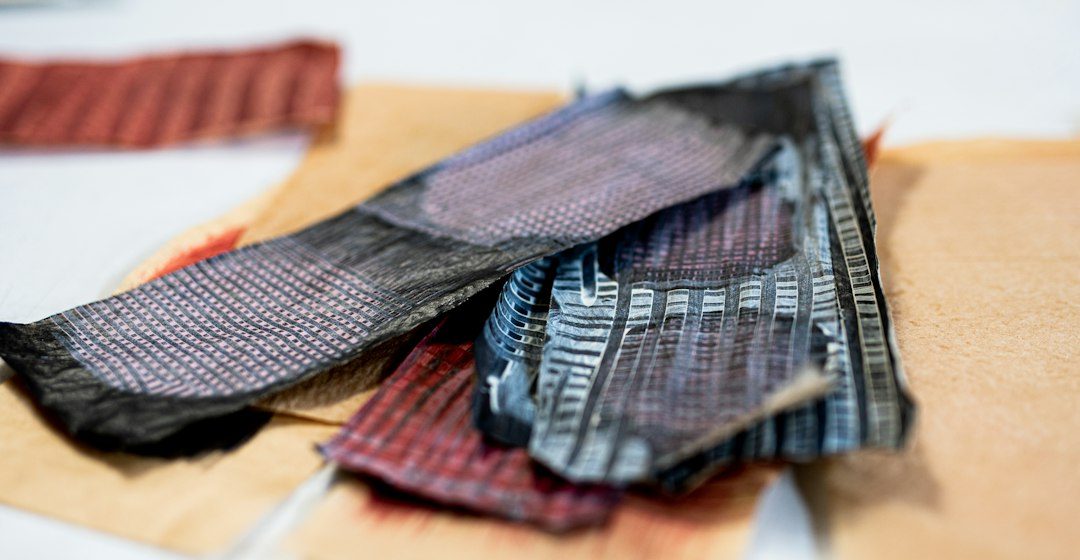
The museum’s ongoing exhibition, Cristóbal Balenciaga: Technique, Material and Form, takes an educational approach to the couturier’s work and influence. Its framing is significant: it encourages visitors to look at how a garment is made, how its material supports a shape and how a designer turns a technical decision into a recognisable visual result. This is a more revealing route into fashion history than treating a collection as a sequence of famous looks.
Technique is not the opposite of creativity. In strong design, technique creates the conditions in which a bold idea can work. A sculptural sleeve, a controlled volume or a clean line may appear effortless, but each depends on decisions about weight, balance, seams and movement. Understanding those decisions helps readers see why a designer’s influence can continue long after the original clothes leave the runway.
Legacy as a living archive
A museum can preserve more than objects. It can preserve the knowledge required to interpret them. The Balenciaga Museum’s exhibitions, collection and educational programming connect garments with the people, materials and methods behind them. This makes the archive relevant to students, makers and visitors who may never intend to work in couture. It shows how a craft tradition can remain useful when it is studied rather than simply celebrated.
Balenciaga’s biography also illustrates the value of mentorship and access. His mother’s work and the marchioness’s encouragement were different forms of influence: one grounded in making, the other in taste and opportunity. Creative careers rarely develop from talent alone. They are shaped by the people who teach, commission, challenge and make room for a young maker to practise.
What contemporary designers can take from the story
For emerging designers, the lesson is not to imitate a historical silhouette. It is to build a strong relationship with materials and process. Sketches become more convincing when a designer understands how a fabric drapes, where a seam carries tension and how a garment behaves after repeated wear. Technical confidence can make experimentation more responsible because it allows a maker to distinguish a useful innovation from a decorative gesture.
For readers, the same perspective changes the way fashion is viewed. Instead of asking only whether a piece looks current, it becomes possible to ask whether it is well made, whether its shape serves the wearer and whether its construction deserves care. Those questions are practical as well as aesthetic, and they help explain why the work of a couturier can remain relevant across generations.
A legacy built through attention
Balenciaga’s lasting significance is not simply that he became a celebrated name. It is that his life shows how close attention to craft can produce a distinct creative point of view. From Getaria to San Sebastián and the international fashion world, the thread running through his biography is a respect for making. The museum’s current programme gives visitors a chance to examine that thread in detail and to see fashion history as a living conversation between technique, material and imagination.
Further reading: Cristóbal Balenciaga Museum biography and current exhibitions and programme.