 w2pK0wutQ3G2
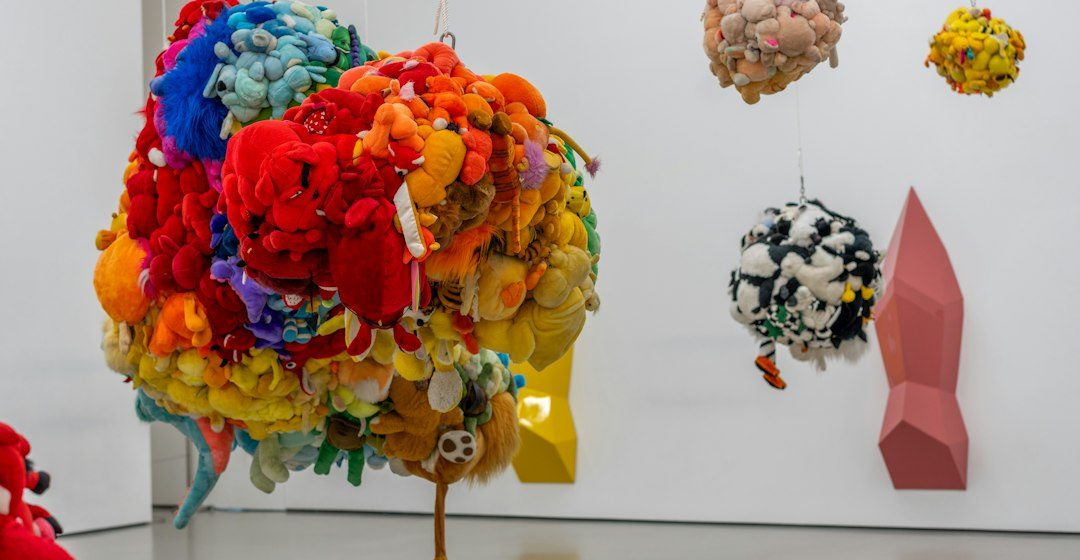
A century after her birth, Aurèlia Muñoz is receiving renewed attention through a major presentation of her work at MACBA in Barcelona. The exhibition offers a timely reason to revisit an artist whose practice moved between textile craft, sculpture and contemporary art. Her work asks a question that still matters to designers: what happens when a material is treated not as decoration, but as a way of thinking?
A Barcelona artist who crossed disciplines
Born in Barcelona in 1926, Muñoz developed a practice that did not stay within one medium. Across more than five decades, she worked with drawing, collage, assemblage, embroidery, macramé, handmade paper and sculptural forms. The range is important because it shows that her interest was never simply in producing textile objects; she was testing how a material could occupy space and carry an idea.
Her work belongs to a period when artists were reconsidering the boundaries between fine art and applied art. Textiles were often associated with domestic labour or decoration, yet Muñoz approached fibres as a structural and expressive language. That decision placed her practice in conversation with sculpture, architecture and design, while keeping the tactile knowledge of making at its centre.
From collage to textile sculpture
Early collages and assemblages helped Muñoz explore how separate elements could create a larger visual system. Paper, thread and found materials offered different weights, surfaces and degrees of flexibility. Rather than hiding the process, she allowed joins, folds and textures to remain visible, making construction part of the finished work.
Over time, the scale of her work expanded. Embroidered pieces and knotted structures could become environments that changed how a viewer moved around them. A textile sculpture is not only something to look at from the front: it can cast shadows, create a sense of volume and suggest a relationship between the body and the surrounding room.
Materials became a vocabulary
Muñoz’s use of macramé and other fibre techniques is often described through craft, but the term alone does not explain the ambition of the work. Knots, loops and repeated connections became a way to build volume. The same basic action could produce density, openness, tension or movement, depending on the fibre and the scale.
Her experiments with handmade paper and other materials widened that vocabulary. Paper can be fragile yet architectural; fibre can be soft yet hold a strong form. By moving between them, Muñoz showed that the properties of a material are not limitations to overcome. They are part of the meaning that a work can communicate.
The centenary exhibition at MACBA
MACBA’s presentation, open from 5 November 2026 to 29 March 2027, places the artist’s work in the context of her centenary. It gives visitors a chance to see how ideas developed across different periods, rather than treating each object as an isolated example of technique. The exhibition also brings attention to preparatory material and the thinking behind the finished forms.
For audiences who know Muñoz mainly through textile art, the exhibition’s broader framing is useful. It makes visible the links between her drawings, models, fibre experiments and spatial compositions. Those connections help explain why her work has been discussed in relation to sculpture and contemporary art as well as craft.
Why her work still speaks to design
Muñoz’s practice feels relevant to contemporary design because it treats material knowledge as a source of innovation. Designers working with recycled fibres, natural materials or low-impact production face a similar challenge: a material’s limits and possibilities must shape the idea from the beginning. The work is not sustainable simply because it is handmade; it is thoughtful because the process is part of the concept.
Her example also encourages a more generous view of craft. Technical skill is not separate from intellectual work. Knowing how a knot behaves, how paper holds a fold or how a fibre responds to tension can lead to forms that a purely digital sketch might not predict. That is a useful lesson for fashion, interiors and product design.
The exhibition is therefore more than a retrospective of an individual career. It offers a way to look again at the relationship between handwork and experimentation, and at the role of artists who expanded the language of materials without abandoning the discipline of making. Visitors can approach the works slowly, noticing how each surface has been built and how the objects change the space around them.