 w2pK0wutQ3G2
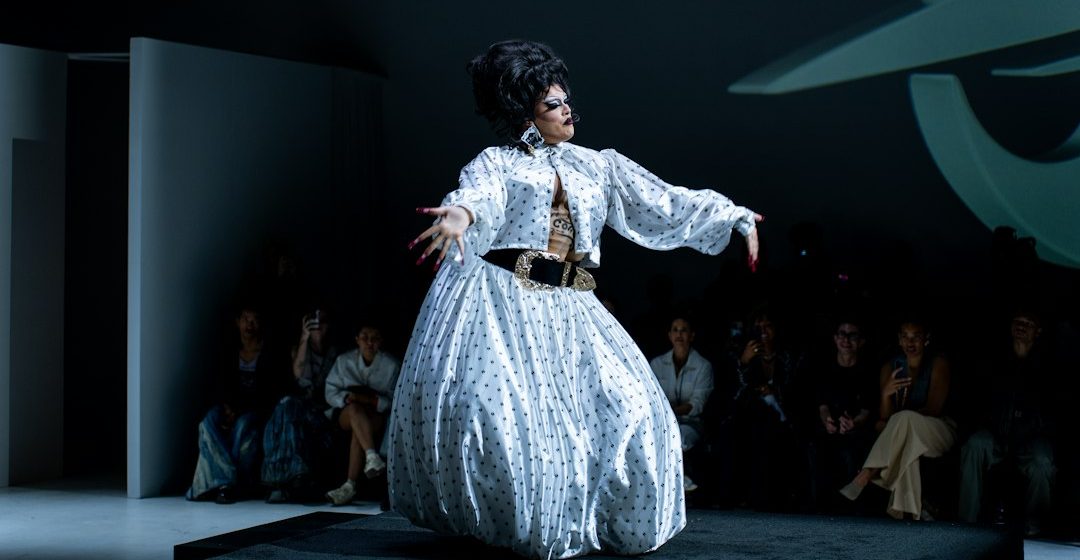
Fashion heritage is often presented as a timeline of designers and trends. The exhibition Corpus Animae. Anatomy of Fashion in Algemesí takes a different route. Opened on 6 November 2026 at the Museu Valencià de la Festa, the exhibition brings together 35 pieces from different periods and uses the body as a way to explore material, identity and creative expression. Its selection connects established names in Spanish fashion with contemporary designers, making the archive a conversation between generations rather than a closed historical record.
An archive built through research
The exhibition draws on the Alventosa Talamantes Archive of Spanish Fashion, a collection developed through ten years of research and collecting. That background is important because an archive is not simply a storage place for garments. It involves decisions about what is preserved, how pieces are documented and what relationships can be drawn between objects from different periods. Curatorial work turns those records into a story that visitors can follow.
The selection includes creations by Cristóbal Balenciaga, Manuel Pertegaz, Pedro Rodríguez, Manuel Piña, Elio Berhanyer, Sybilla, Jesús del Pozo, Francis Montesinos, Josep Font, Hannibal Laguna, Palomo Spain and Ana Locking. It also features Valencian and contemporary designers such as Carmen Celedonio, Ancor Montaner, Inés Conti, Paula Samper and Juan Andrés Mompó. The range gives visitors a sense of how Spanish fashion has changed without suggesting that its history follows one single style.
The body as a way to read clothing
Corpus Animae is organised into three sections. El cos físic focuses on garments, their materials and the archive. This section invites visitors to notice fabric, construction and the physical qualities that shape a garment. The details can be easy to miss in a photograph, but become more visible when a piece is considered as an object made to move with a person.
El cos anatòmic connects parts of the human body with fashion ideas such as identity, craftsmanship, creativity and elegance. The approach suggests that clothing is not separate from the body it dresses. A neckline, shoulder, waist or sleeve changes how a silhouette is read, while the wearer’s movement gives the garment its final expression. The third section, El cos animat, brings pieces by different designers into an installation that explores relationships between their styles and proposals.
Why the mix of generations matters
Placing historical and contemporary work together can reveal how design ideas travel. A modern designer may reinterpret a proportion, a technique or a relationship between fabric and body that has appeared in earlier work. The connection does not need to be direct imitation. It can be a response to an inherited visual language, or a deliberate departure from it.
For younger creators, seeing garments by established designers alongside current work can make fashion history feel more immediate. It shows that design is shaped by accumulated knowledge as well as individual invention. For visitors, it offers a way to understand Spanish fashion as a field of regional influences, different generations and changing ideas about how people present themselves.
Fashion as cultural memory
Garments record more than taste. They can reflect changes in social life, technology, manufacturing and the roles people occupy. A formal piece may reveal expectations about ceremony or public appearance; a more experimental design may show how a creator questioned those conventions. When objects are preserved and interpreted carefully, they become evidence of how people lived and how designers responded to their time.
The exhibition also highlights the value of regional creativity. Valencian designers and makers appear alongside nationally recognised names, which helps broaden the idea of what counts as Spanish fashion heritage. Cultural memory is stronger when it includes different places and practices rather than concentrating only on the best-known fashion capitals.
What visitors can take from the exhibition
Visitors do not need specialist knowledge to engage with the garments. Looking closely at fabric, shape, seams and finishing can be a useful starting point. Ask what the material makes possible, how the garment changes the body’s outline and what kind of movement it seems to invite. Those observations help translate fashion from a sequence of labels into a practical design language.
The exhibition is scheduled to run until 1 June 2027 at the Museu Valencià de la Festa. The official tourism listing provides the current opening schedule and confirms free admission. Visitors should check the venue’s information before travelling, especially during seasonal timetable changes.
A heritage that continues to move
Corpus Animae makes a persuasive case for treating fashion as a living part of cultural heritage. Its 35 pieces connect technical skill with personal identity and place, while the three-part structure encourages visitors to look beyond the surface of a garment. By bringing established and contemporary designers into one exhibition, it shows that fashion history is not finished: it continues whenever a new maker learns from the past and creates something of their own.
Further reading: Comunitat Valenciana — Corpus Animae exhibition details.