w2pK0wutQ3G2
Cristóbal Balenciaga’s name is often associated with sculptural dresses, unusual proportions and a quiet sense of luxury. Yet the most useful way to understand his influence is to look beyond the finished silhouette. His work began with construction: the way fabric behaved, where a seam should sit, how volume could be created without relying on ornament.
From a coastal workshop to Paris couture
Balenciaga Eizaguirre was born in Getaria in 1895. His mother was a seamstress, and the craft was part of his everyday environment from childhood. The Spanish Ministry of Culture’s biography notes that he opened a couture house in San Sebastián in 1914 before establishing houses in Madrid and Barcelona. He moved to Paris in 1937, where his collections quickly earned attention.
That early connection to making helps explain why Balenciaga is remembered as a technically minded designer. Rather than treating clothing as a surface to decorate, he worked with cut, proportion and fabric to change the relationship between garment and body.
Why his silhouettes still feel modern
Balenciaga’s experiments loosened the familiar waist-focused shape of mid-century dress. The balloon, tunic, sack and baby-doll lines explored space around the body. A garment could create its own volume instead of simply tracing the wearer’s outline. That approach gave clothing movement and architecture at once.
Modern designers continue to revisit these ideas because they solve a creative problem that never disappears: how to make a piece distinctive while keeping it wearable. The lesson is not to copy a historical silhouette. It is to understand why it worked, then translate that principle into contemporary materials, proportions and needs.
Material knowledge is a creative advantage
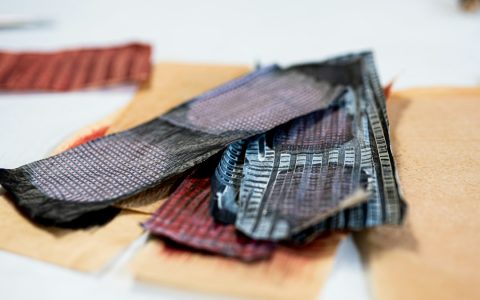
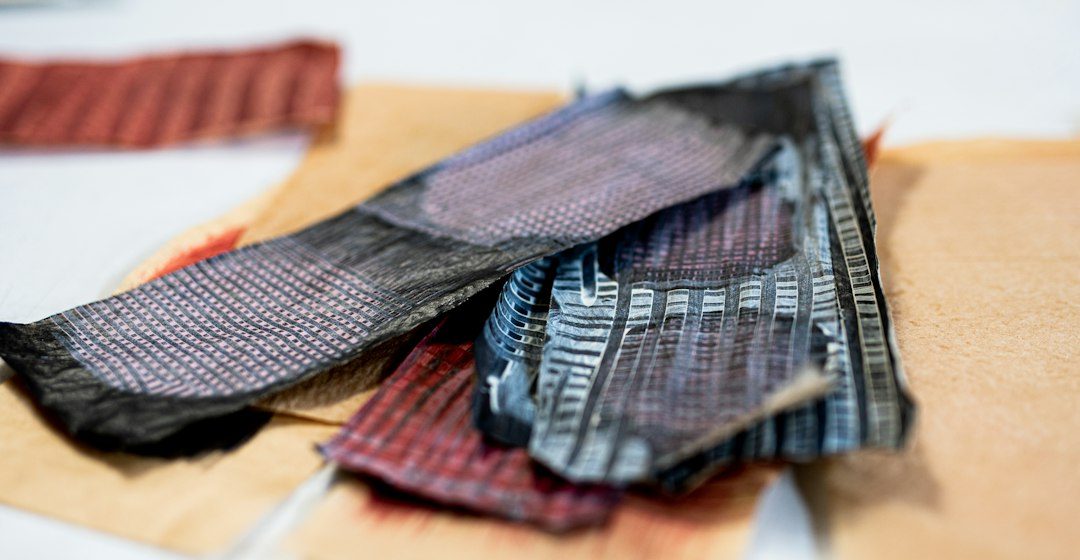
Fabric choice is not a finishing decision. Weight, drape, stiffness, texture and recovery all influence the shape a designer can build. A soft material may collapse where a structured one holds a curve; a seam may become a visual line or disappear into the form. Balenciaga’s reputation for precision reminds students and makers that experimentation is often practical: test, pin, cut, adjust and repeat.
His legacy also challenges the idea that innovation must be loud. A change in shoulder, back, hem or volume can transform a piece even when the palette remains restrained. The eye notices a confident proportion before it notices embellishment.
What a museum can teach a new generation
The Cristóbal Balenciaga Museoa in Getaria currently presents Technique, Material and Form, an exhibition running through January 10, 2028, that places the designer’s process and influence at the centre. Its educational framing is a useful reminder that archives are not merely about admiration; they are laboratories for seeing how decisions were made.
For anyone developing a personal style or studying fashion, the practical takeaway is to look at garments from the inside as well as the outside. Notice construction, proportion and how a piece moves. Balenciaga’s work shows that a strong design is not necessarily the one with the most detail. It is the one where every detail supports the form.
Further reading
Spanish Ministry of Culture: Cristóbal Balenciaga · Cristóbal Balenciaga Museoa biography · Current museum exhibitions