w2pK0wutQ3G2
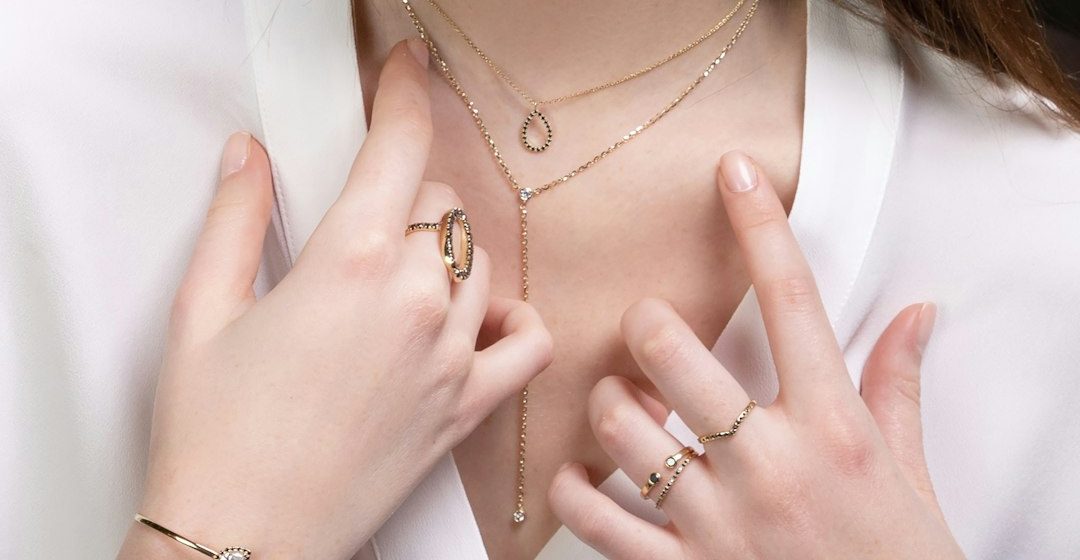
Jewellery often catches the eye through its finish, stone or silhouette, but the details that determine whether a piece becomes a daily favourite are less visible. A clasp that is difficult to open, a sharp edge, a ring that turns constantly or an earring that feels heavy after an hour can make a beautiful object inconvenient. The most wearable designs balance appearance with the way a person actually moves.
Look beyond the front view
When trying on a ring, bracelet or necklace, examine the parts that touch the skin. Edges should feel smooth; the underside should not snag easily on knitwear; and the piece should sit naturally rather than forcing the wearer to adjust it repeatedly. A necklace that looks balanced in a display may twist when worn, especially if its pendant or clasp is heavier on one side.
Comfort is individual. A person who works at a keyboard may prefer a low-profile ring that does not interfere with hand movement, while someone who wears a bracelet all day may want a clasp that can be secured without help. Earrings deserve a similar check: consider how they hang, whether the backing feels secure and whether the weight is comfortable over several hours.
Clasp and construction deserve a closer look
Closures are often the first parts to be tested in everyday use. Ask how the clasp works and whether it can be operated with one hand. A secure closure should be easy enough to use without becoming fragile. If the piece includes a hinge, chain link or moving component, inspect whether it feels sturdy and whether a jeweller can repair it if needed.
For bracelets and chains, a slightly larger clasp may be more practical than a tiny one that disappears into the design. For rings, the shape of the band and the placement of decorative elements can affect how it feels between fingers. For earrings, a well-designed post, hoop closure or hook can reduce irritation and make the piece easier to keep secure.
Ask what can be repaired
Before buying, ask whether the design can be resized, polished, re-clasped or repaired locally. Some settings are more straightforward to service than others; pieces with delicate details or complex construction may require a specialist. A seller who can explain maintenance and repair options gives the buyer more useful information than a vague promise that the jewellery is “built to last.”
Repairability is not only about cost. It can help preserve a piece that carries sentimental value and reduce the need to replace it when a small component fails. Keep the receipt, material information and any care guidance together so the next jeweller has a clearer starting point.
Choose proportions that suit your routine
Jewellery can be expressive without being uncomfortable. Think about the activities that make up a typical day: commuting, exercise, work, cooking or caring for children. A large statement piece may be ideal for occasional wear, while a smooth, lighter design may fit a daily routine better. There is no single correct choice, but trying the piece with the movement it will encounter can reveal issues that a mirror alone cannot.
High gold prices have also encouraged consumers in many markets to consider smaller or lighter jewellery, according to World Gold Council reporting. That market trend does not mean every lightweight design is durable or every heavier item is better. Buyers should evaluate the construction, intended use and price separately rather than assume weight alone determines quality.
Make the purchase a conversation
Ask the jeweller to explain the material, finish, closure and care requirements. If the piece contains gemstones, understand which stones are used and what cleaning methods are safe for them. Keep the information in writing, especially for custom work. A little attention at the point of purchase can prevent frustration later.
Jewellery is meant to be worn, not just admired in a box. The best everyday piece is the one whose design fits the wearer, whose small components are dependable and whose maintenance is understandable. When those details are considered alongside aesthetics, the purchase is more likely to become part of a wardrobe rather than an occasional object left unused.
Sources
Featured image: jewellery design, photo by Segal Jewelry on Unsplash.